


In October of 2025, Bessemer Venture Partners published a roadmap for how AI would upend India’s $264 billion IT services industry. Among the many factors listed was the rise of challenger — AI-enabled services — firms; or as we discussed in our latest post, neofirms.
It concluded with a definitive DNA of firms positioned to win: an exceptional founding team with domain expertise, AI-driven platforms that integrate client infra, pricing closer to usage and outcomes, ability to show business impact quickly, and margins upwards of 60%.
On a different timeline, Sidu Ponnappa was already in the eye of this ambition — building with all the elements of that DNA. Sidu’s founding of realfast.ai, an AI-native IT services firm that clocked $3M revenue in H1 of 2026, came right before ChatGPT.
He had the expertise, having built and sold an IT services firm (C42) once before, had gathered a brilliant founding team at realfast, cracked at-scale delivery with their AI-platform (Exo) … and were operating with a ROI-first pricing, delivering results under a quarter, at close to a 60% margin.
His belief was based on the model capabilities of GPT 3.5 and a hunch that it was going to bring in an impending 2.0 for the IT industry. As we have since seen, he was on to something.
We sat down with Sidu to dig into the details; what emerged is a list of lessons and guiding principles for anyone building or backing an IT challenger firm.
Table of contents:
The wedge: picking up the pieces and smallest valuable projects
Gathering a team with 3 specific skillsets
Why pricing must be molded around the customer
The new, not absent, form of productizing at a neofirm
5 notes for challenger firm founders
#1: The wedge: picking up the pieces and smallest valuable projects
At an IT firm, every customer has a different shape of work, often built around a their org chart, processes, and complexities. A wedge, then, can’t be something standard like an NDA or an audit report. Here are Sidu’s heuristics for a wedge in IT, from what worked for them:
The first one is pain that is already felt. “What we do is we pick up the pieces. We will not touch a deal where the customer has not tried and failed.” Sidu says.
He shared two examples to illustrate this: first, where they picked up a module that a previous vendor had missed the deadline on, and second, where they were asked to rip out a legacy SaaS tool everyone was sick of. Both cases were easier sells because the pain was already felt.
Another wedge to leverage is efficiency, passing on the gains of AI to their customers. This worked because, in an industry that is 95% snakeoil, as Sidu put it: “no relationship [with existing vendors] survives someone coming in offering twice as fast, twice as good.”
This focus on efficiency is also an internal mandate. “For every dollar they spend with you, can they visibly and obviously see that they’re getting $2 back?” Sidu said, with an emphasis on visibly and obviously.
Beyond these, another heuristic they followed was: “starting with the smallest valuable project, one that moves the needle.” It has since proven to be a better approach than negotiating a big scope upfront.
Sidu and team treat it as an entry point, one that if they deliver on, inevitably leads to expansion because of the sheer scale of demand for IT work. It has also worked for them.
Sidu shared how one account started as a single manager’s discretionary spend, and soon had several managers stack budgets making it a mid-six-figure deal — entirely through word of mouth inside the org.
He calls it the “customers feeling the $2”.
#2: Gathering a team with 3 very specific skillsets
Delivering at this bar of quality and speed needed a team Sidu hadn’t seen fully assembled before. Our neofirms piece had surfaced a composition of SMEs, builders, and amplifiers. Sidu makes a few more additions specific to selling IT services:
Management consulting skillset — navigating top management, customer politics, aligning stakeholders,
Consumer big-tech product execution, and
Services delivery management.
The bend for consumer product execution is curious. Sidu shares that he has seen consumer product folks bring a sense of metrics-obsession he hasn’t seen anywhere else, which isn’t just a good-to-have but a necessity for delivering great services. The phrase he used was they “live or die by a number they see every day — usage, retention, whether anyone came back”.
On the builder front, Sidu has a high bar for what makes someone great: “Two weeks of velocity is easy. Sustaining it past two weeks is the brutal part.” At the base of these filters is Sidu’s search for people who operate like kaarigars, or artisans, and carry a strong sense of pride in their work.
It’s a little nostalgic almost, and reminded us of Sidu’s interview with the Gojek leadership where they discussed 10X engineers and Sidu’s bar for talent as the then Head of Global Tech Recruitment at Gojek.
#3: Why pricing needs to be molded around the customer
realfast.ai doesn’t operate on one standard pricing model. Outcome-based, fixed-price, or hourly — Sidu calls them implementation details that only matter if they align with how the customer wants to pay and what you must charge to cover your costs.
In a recent X article, Sidu called it a fitness function for anyone running a services company: revenue, immediately followed by margins.
He closed mincing no words:
“[In services] Your revenue is a percentage of your customer’s revenue. How does it matter whether the customer pays you that percentage through billable hours or through fixed price fixed scope or through ownership of metrics, input metrics or ownership of output metrics or the ownership of outcomes?”
He’s candid that this is a fairly new motion. So, to keep it from becoming endlessly malleable, Sidu maintains a steady north star: “My objective is I have to run my projects at 60% gross margin.” He goes on to add that services have two core cost units: cost of tokens and avg. cost per billable hour, and “everything else is packaging”.
“The stress test is: you go to a customer with a model, the customer says no, I don’t do this. Are you going to tell the customer to get lost? So who gives a sh*t what I think? We have to give a sh*t what they think.”
Which is why, at realfast.ai they sell how the buyer wants to buy. The messy details of the math behind the margins is the founders’ job.
#4: The new, not absent, form of productizing at a neofirm
If you go to realfast’s website you will find mentions of their Exo product, an interesting juxtaposition for a services company. So I asked, what does it do? The story wasn’t what I was expecting.
Exo is entirely internal. Sidu calls it their alpha.
It’s on the website because one, customers want to know how a new kind of services firm will deliver on the tall promises it is making. And two, the industries they sell to have stern compliance issues and the buyers want a high level of confidence in their vendor’s operations.
Exo is a product, but in an entirely new outfit. It is the internal tooling carrying the agent harness, logging, and compliance controls that allows a team of 5 engineers on a pod to deliver at superhuman speed and capabilities. Constantly made better atop new model capabilities.
If it’s so good, why not sell it? We asked, nursing a SaaS hangover. “Why would I sell my alpha? Why wouldn’t Uber sell its fleet management solution? Same question. It’s tailor-made alpha. Why would Google not sell its search algorithm?” Sidu replied.
Beyond wanting to protect the alpha, the fit doesn’t work either: “Remember when all our clothes were tailor-made? One person’s clothes wouldn’t fit another. That’s software. SaaS is ready-made clothes. We’re talking about something tailor-made — nobody else can wear it unless they’re the same size and shape.”
A reminder of how services, by its fundamental gravitational force, is custom, and that fighting it is a fool’s errand.
This conviction and clarity on what to productise, what not to, and whether that product stays internal or gets exposed wasn’t easy to come by. One of the most painful experiences, Sidu recalls, is spending two and a half years trying to productize in Salesforce.
“In 2023 and 2024, realfast built a unit-test-writing harness for Salesforce Apex code. We spent 4 months on solving accurate diffs, but then GPT-4o shipped and solved the problem outright.” It taught them one core lesson: a services firm should never build a product ahead of demand, no billable project = no platform work.
Sidu’s another guiding principle for services is: “When the models get better, your TAM should go up.” You’ll often find him tweeting news and updates with a cheeky “TAM just went up.”
#5: Five lessons to other challenger firm founders
“Agentic,” “harness,” “product” — Sidu calls them useful shorthands that often get mishandled. His advice to founders building in services is to use the buzzwords carefully, and focus on the real thing underneath.
“Strip the labels”, he argues, “and things get simpler, customers have a problem and a budget, and they want a dollar to come back as two, visibly, fast.” The ROI obsession, reiterated.
He shared five more concrete pieces of advice in our chat and in this X article:
First: beware sales-market fit without product-market fit. An IT services deal is easy to close on a good relationship and a confident pitch, but whether the client’s team actually adopts what you’ve built and keeps running it the material problem.
Second: sell speed and quality only to the people inside a client org for whom it’s urgent right now. Most of an enterprise doesn’t want humanly-impossible delivery — in IT specifically, plenty of stakeholders below the top read speed as risk, not as a benefit, and will resist a vendor moving faster than their own governance.
Third, and this is the one he returns to most: don’t lock into a vertical or a thesis ahead of demand. “Run a greedy algo: take the best-paying work in front of you, extract what compounds, repeat.”
Fourth: whether you are VC-funded or bootstrapped, run the numbers before you take a customer’s money. His formula is straightforward: blended build rate across your team, plus average cost per token, is your cost base. Mark it up 50 to 60 percent and sell at that. “There is no way a services company makes a loss unless you’re screwing it up.”
Fifth: pivot, pivot, pivot.
“Pivot intentionally every time there is a step function change in AI capabilities. A step change in the underlying tech requires a step change in the strategy to take advantage of it.
#6: Looking ahead
RealFast has grown 26x since the start of this year and closed $3M in revenue in H1 of 2026 alone. Still early numbers, he says, but promising.
In parallel, the pressure on the incumbents is real. The NIFTY IT saw one of its sharpest corrections after the announcement of the OpenAI Deployment Company, a new business that embeds engineers directly inside client organisations to redesign workflows and deploy AI at scale.
The market read it as a signal that AI companies were coming for the transformation work and did a selloff; it has partially recovered since.
Whether this pressure gives realfast more room, or the IT giants adapt fast, or the labs swoop in, or all those worlds end up blazing in a competitive rhythm, is yet to be seen. As far as Sidu is concerned, he is building, unfearing and focused: “There’s so much software to be built.”
After all, he didn’t start realfast on the back of a bold thesis, but a simpler and sturdier belief in the step change: that the oldest tradeoff in the IT, “cheaper, better, faster, pick two”, wasn’t true anymore, and those who find a way to give their customers this newly-made-available superpower will win.
Visibly. Obviously.
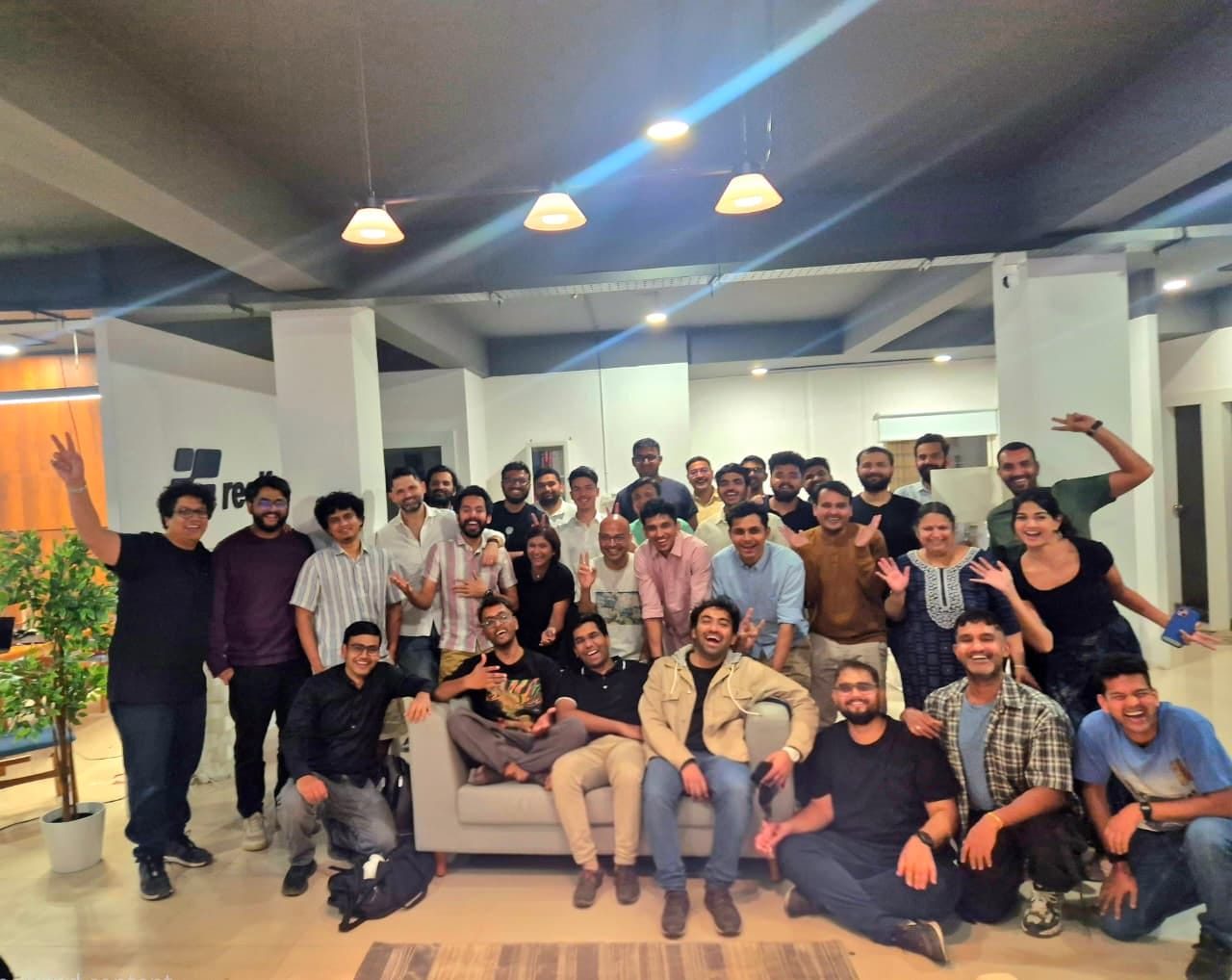
Thanks a bunch to Sidu for taking out the time to talk to us! P.S. realfast.ai is backed by PeakXV and RTP Global, Bessemer’s thesis stands independent of it.
Brought to you by Chargebee. Chargebee helps AI-native, recurring revenue businesses scale with billing and monetization infrastructure built for speed, flexibility, and rapid iteration.
I found the idea of “picking up the pieces” really interesting, especially the focus on working with customers who have already tried and failed to solve a problem. It makes sense that the pain is already clear, which probably makes it easier to show the value of the solution. I also liked the point about shaping pricing around customer outcomes rather than simply offering a standard service. It feels like a more practical approach for building trust and showing real business impact.